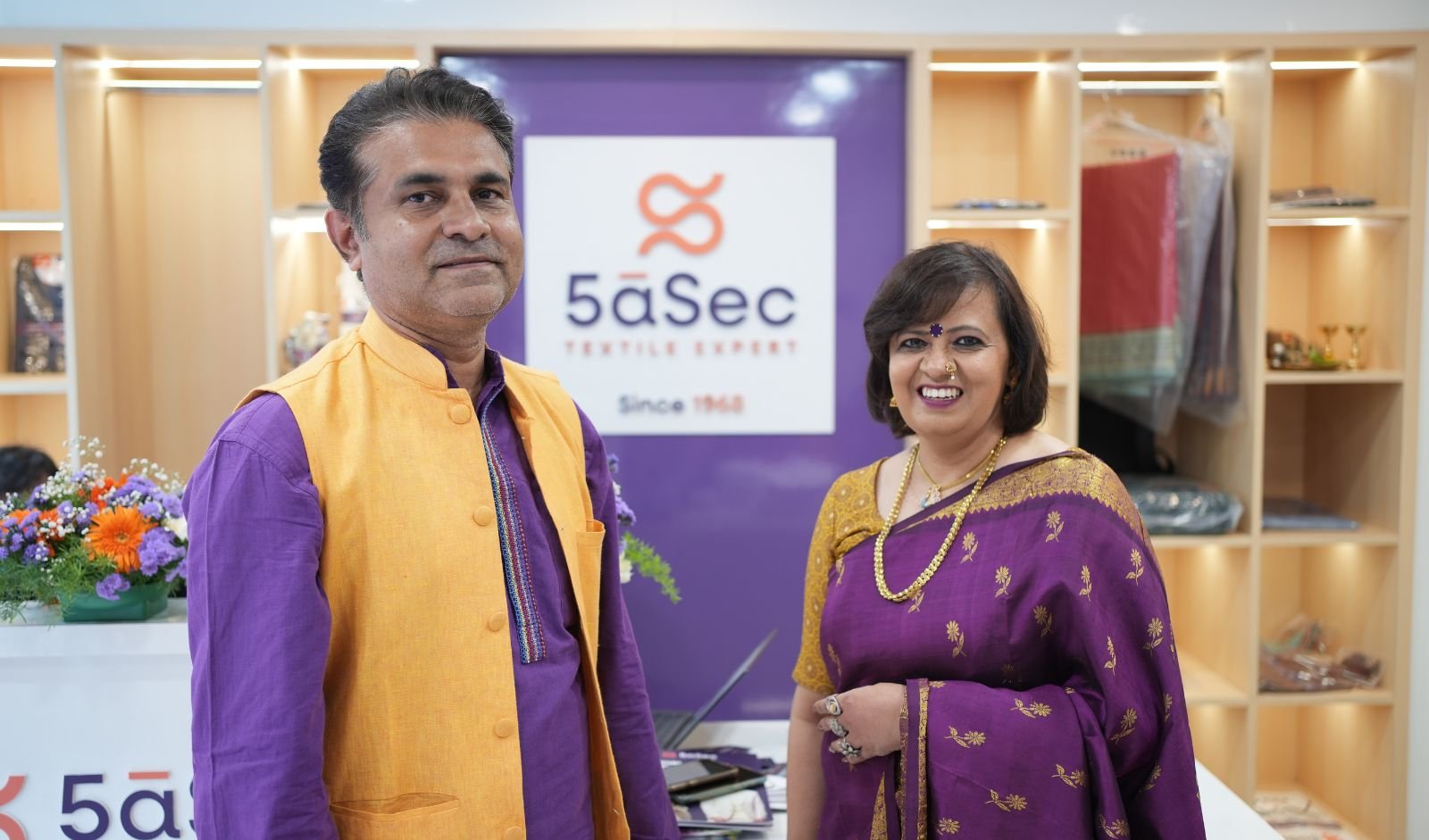
5àsec, the France-based organised dry-cleaning and textile-care chain, has opened a new outlet in Bengaluru and is pushing a franchise-led rollout across India in partnership with Franchise India. The brand arrives with a network of 1,900 stores across 33 countries on five continents, and it is entering one of the few large consumer markets where organised laundry remains almost entirely unbuilt.
5àsec serves roughly 114,000 customers a day worldwide, and its stores generate an average turnover of around EUR 225,000, according to figures published by Franchise India. Those numbers matter less as a benchmark than as evidence of system maturity: a brand operating at that scale has already solved the unglamorous problems — equipment specification, chemical sourcing, throughput scheduling, damage liability — that sink most independent laundry ventures.
India is the opposite picture. Garment care is overwhelmingly served by unorganised neighbourhood operators with no standardised pricing, no turnaround guarantee and no recourse when a garment is ruined. That gap is precisely the arbitrage an international service system is built to exploit, and it is why laundry keeps appearing in the shortlists we discuss in our review of non-food service franchise opportunities across Asia Pacific and MENA.
The brand has identified its priority Indian markets, and the list reads like a straightforward density play rather than a national land grab.
Laundry economics reward concentration. A textile-care network gains leverage from shared processing capacity, route efficiency on pickup and delivery, and a single marketing spend covering multiple catchments. Scattering outlets across a dozen cities produces the opposite: every location carries its own fixed plant cost with no shared load. Franchise partners evaluating this category should read the city list as the operating logic, not as a wish list.
“5àsec is marking a significant milestone in its India expansion journey.”
The comment came from Gaurav Marya, Chairman of Franchise India Group, who pointed to the brand’s cleaning technologies and franchise-led model as the basis for scaling across key Indian markets while bringing international standards of quality, convenience and sustainability to Indian consumers.
5àsec runs a dual-technology approach, combining conventional dry-cleaning with aqua-cleaning processes developed with a stated focus on reducing environmental impact while shortening turnaround times. A dedicated R&D department works on equipment optimisation, process improvement and new service concepts. The brand also operates home delivery alongside in-store service, and it trains staff through a dedicated school in Paris intended to hold service standards consistent across the network.
The brand’s record includes the Highest Brand Awareness award in its sector and eight consecutive years as Best Dry Cleaner at France’s Meilleur Pressing de l’Année. For a franchise partner, the training infrastructure is usually the more decisive asset: in a category where a single ruined garment destroys a customer relationship permanently, transferable process discipline is the product being licensed.
The 5àsec deal sits inside a visibly broadening pipeline of international brands entering India through franchise intermediaries. Recent activity spans coffee, experiential retail and real estate services — Italian chain Segafredo Caffè signed a master franchise targeting 100 cafés in three years, the Paris experiential art brand Iris Galerie took an India master franchise while mapping Singapore, Bangkok, Tokyo and Seoul, and Century 21 entered with a 126-region model targeting 1,500 offices.
What distinguishes 5àsec in that group is the category. Food and beverage entries compete for the same mall footfall and the same operator pool. A textile-care network competes with almost nobody organised, which changes both the site-selection maths and the customer-acquisition cost. Investors weighing the broader landscape will find the structural context in our guide to franchising in India in 2026.
Three observations carry beyond India. First, service franchises with industrial back-ends travel better into emerging markets than they are usually given credit for, because the informal incumbent cannot match consistency at any price. Second, a brand with 1,900 units has already absorbed the cost of learning — the franchise partner is buying a solved operating manual, not a concept. Third, categories like this tend to open quietly and close fast; once two or three metro clusters are committed, national rights stop being available.
The same reasoning applies across the region’s B2B and B2C service categories, from decontamination to facilities support, as our profile of the Sanondaf decontamination franchise illustrates. For investors accustomed to evaluating restaurant deals, the shift in mindset is the useful part: the asset here is process reliability, and it is measured in repeat frequency rather than covers per day.
The brand’s global network and market list are published on the official 5àsec international website.