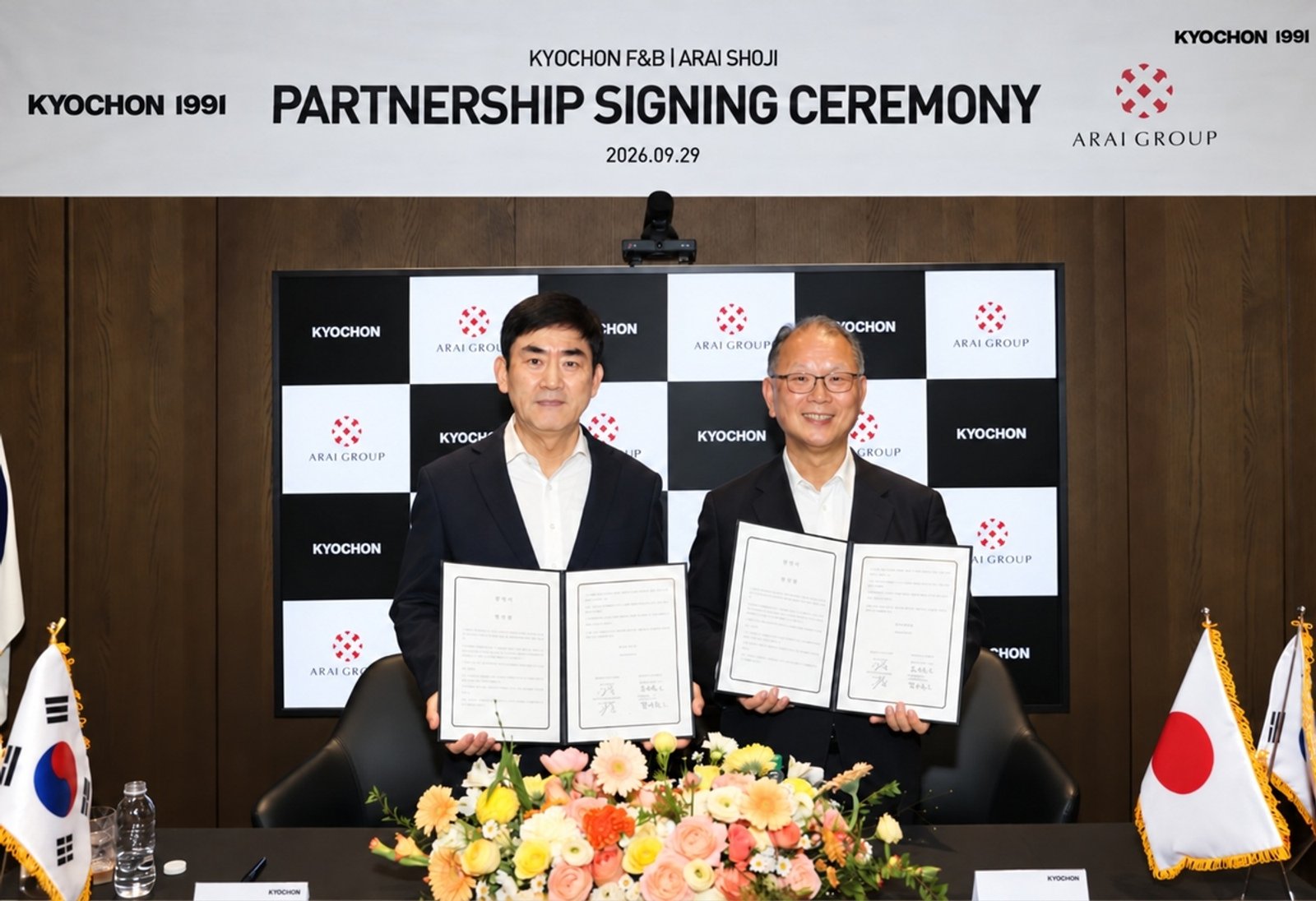
Kyochon F&B, the Korean operator of Kyochon Chicken, has signed a strategic memorandum of understanding with Arai Shoji (also styled Arai Corporation), a Japanese food distribution company, to enter Japan. The first store is planned for Tokyo in the first half of 2027, and the market will be built under a multi-unit franchise model, according to reports from Seoul Economic Daily and MarketTech APAC published on 6 and 7 October 2026.
The agreement is a strategic MOU rather than a signed development schedule. Kyochon F&B said it will bring the brand’s sauce and cooking method to Japanese consumers, using Arai Shoji’s local distribution network and food-business experience as the entry platform. The two companies will cooperate on quality control for store operations, training of local staff and marketing. Neither report discloses the number of stores, the territory boundaries or the commercial terms.
Under a multi-unit franchise, a single partner operates several stores inside a designated contract territory instead of one franchisee per site. Kyochon will open in Tokyo first and then widen to surrounding cities depending on how the market responds, a staged sequence that lets the franchisor test demand before committing the partner to a wider footprint.
Per Seoul Economic Daily, Arai Shoji was founded in 1920 and has run auction and food distribution businesses. In 2020 it acquired Ongane Holdings, an importer and distributor of Korean food products, and it has been moving into restaurants, opening a Belgian waffle specialty shop in 2024. For a Korean chicken brand, a partner that already moves Korean food products through Japanese channels shortens the supply and compliance learning curve.
…a new growth pillar for Kyochon’s global business.
That is how a Kyochon F&B official described Japan, in the Korean-to-English translation published by Seoul Economic Daily.
Japan lands alongside continued growth in China. Kyochon opened its first outlet in Shenzhen in February 2025 and has since opened Kyochon Chicken Wuxi in a shopping mall near Lake Tai in Jiangsu province, the same report states. Korean fried chicken is an active category for cross-border deals; see our overview of Korean fried chicken master franchises across Asia Pacific and the recent Bonchon ownership change for context on how peers are being capitalised and expanded.
Korean brands are choosing distribution-led partners over pure capital partners when they enter mature markets. Kyochon’s structure points to a pattern worth tracking: a staged opening in one flagship city, supply and training obligations written into the partnership from day one, and territory growth tied to measured demand. Investors weighing similar brands in Southeast Asia or the Gulf can use it as a template for diligence, particularly on who controls ingredient supply and local-staff training. Our guides to Korean franchise opportunities in Southeast Asia and the Gulf, BHC’s Philippine entry through a master franchisee and master franchise versus area development versus joint venture set out how those structures compare. Because the MOU discloses no unit targets, the deal’s real scale will only be visible once the Tokyo store opens and a development schedule is announced.
Source: Seoul Economic Daily — Kyochon F&B Enters Japan With Arai Shoji Partnership; additional reporting: MarketTech APAC — Kyochon to open first Tokyo store in 2027 under multi-unit franchise model