The short answer. Small-format restaurant franchises — food-court units, kiosks, compact counters and delivery-led kitchens — let a brand enter an Asia Pacific or MENA market with a lighter build-out than a full dine-in restaurant, but they place more weight on site access, speed and operating discipline. They suit partners who want to test a market in stages before committing to a larger roll-out.
Full-service restaurants ask a master franchisee to commit capital to large premises before the market has validated the brand. Small formats change the order of that decision. A brand can open in a busy shopping or transit environment, learn local demand, and then add larger stores. Franchisors also use compact units to put the brand in front of more consumers without relying on a single flagship.
Recent deals show both ends of the range. In India, GTGO and CJ Foods plan to introduce bibigo bapsang through standalone dine-in restaurants and through food-court outlets, as described in our report on the bibigo bapsang partnership. In the United States, Dave’s Hot Chicken’s 500th-restaurant milestone came as the brand moves beyond conventional restaurant real estate into major airports.
The table compares the formats on non-financial criteria. Capital intensity is described qualitatively and varies by brand, city and landlord terms.
| Format | Typical location | Capital intensity | Operating focus | Main question to test |
|---|---|---|---|---|
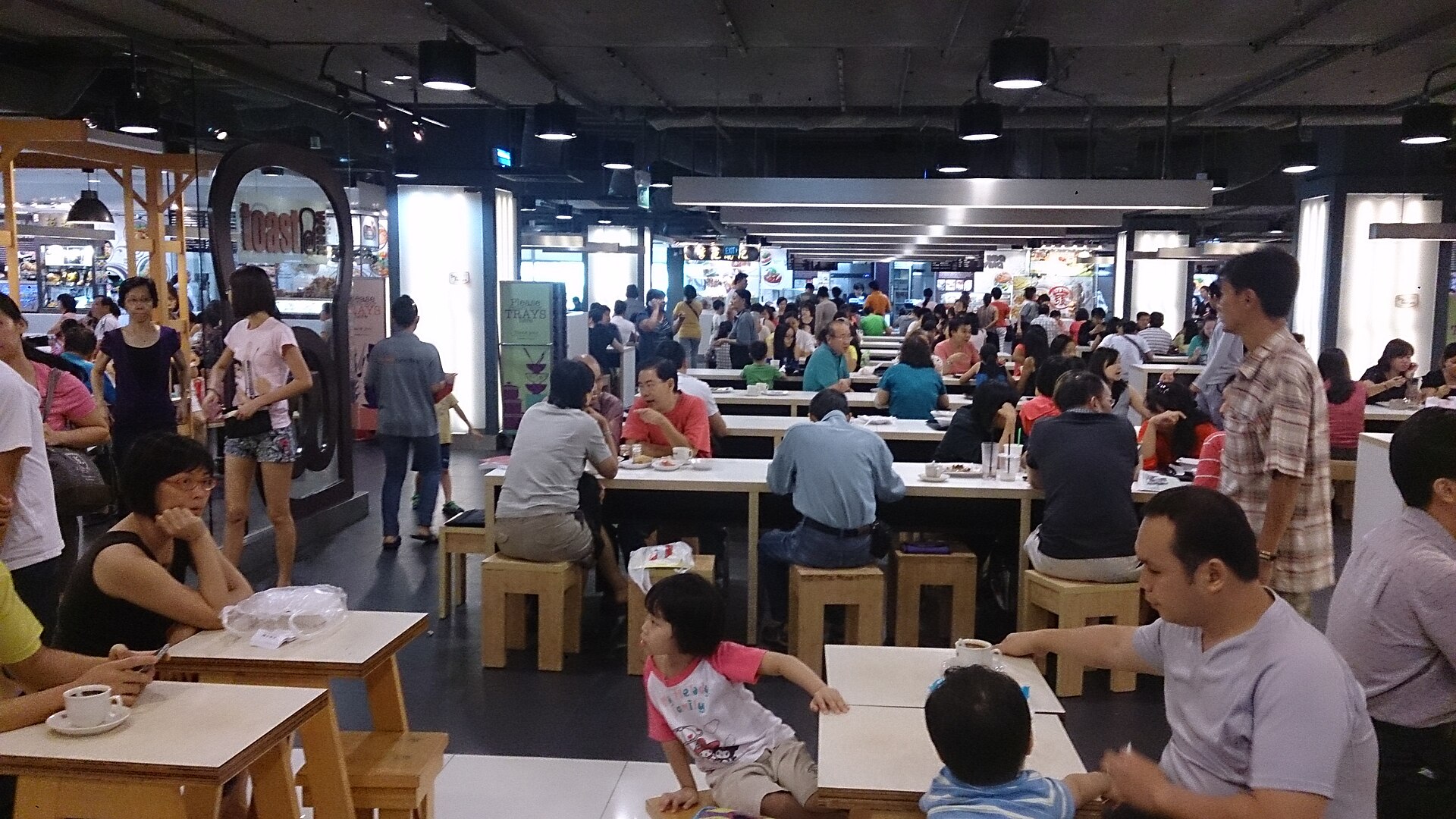
| Food-court unit | Shopping malls and mixed-use developments | Lower than a full dine-in restaurant; shared seating | Speed, a tight menu and brand recognition | Does the brand stand out among competing counters? |
| Kiosk or counter | Concourses, campuses and high-footfall corridors | Low; minimal kitchen | Grab-and-go items and fast service | Can the menu work with limited equipment and storage? |
| Delivery-led kitchen | Lower-rent sites close to residential catchments | Low to moderate; no front-of-house | Delivery partners, packaging and order accuracy | Does food quality hold up in transit, and does the brand build its own demand? |
| Compact standalone | Street-front or neighbourhood sites | Moderate; small dining area | Dine-in and takeaway in one unit | Is there enough visibility without mall traffic? |
| Transit and airport unit | Airports, stations and travel hubs | Moderate; landlord-driven design standards | Peak-hour throughput and extended hours | Can the operator staff a demanding schedule? |
Menus built around customisable sets, fried items or beverages travel well into compact units. Dishes that depend on long cook times, large equipment or table service often do not. Before signing, a partner should ask the franchisor which formats are already running in other countries and which are still being tested.
Small formats depend on positions inside malls, transit hubs and mixed-use projects, and those positions are often controlled by a handful of landlords. A local partner with existing landlord relationships has a real advantage here, which is one reason franchisors look closely at partner selection, as we explain in how international franchisors choose a master franchisee in Asia Pacific and MENA.
The structure of the agreement matters as much as the format. A master franchise, an area development agreement and a joint venture each allocate site-selection risk differently, and our comparison of master franchise, area development and joint venture sets out the differences. For compact formats, development schedules are usually negotiated around city-by-city opening targets, and partners should seek flexibility on the format mix.
Non-traditional sites, including airports, campuses and hospitals, are a related theme and are covered in non-traditional franchise locations in Asia Pacific and MENA. For the restaurant segments as a whole, see our restaurant franchise opportunities guide for Asia Pacific and MENA, our overview of fried chicken franchise opportunities and our report on Korean franchise opportunities in Southeast Asia and the Gulf.
They generally need less build-out and a smaller team, but the saving depends on the brand, the city and the rent terms. Treat any figure as something to verify in the franchisor’s disclosure and in the landlord’s lease offer.
Concepts with a focused menu, fast preparation and strong brand recognition. Customisable meal sets, fried chicken, beverages and desserts are common examples, as long as the unit can be run by a small team.
They can, but the brand must be able to hold quality in transit and generate its own demand. Operators should confirm how the franchisor supports packaging, delivery platform relationships and marketing.
Shortlist brands that already run compact formats in more than one country, ask for operating data from existing partners, and agree on a development schedule that matches your site pipeline. An independent adviser can help structure these conversations.
For the sector background, the International Franchise Association publishes industry research and education for franchisors and franchisees.
Email: info@vffranchiseconsulting.com | Hotline: +84 90 306 54 58
Author: Sean T. Ngo, CEO and Co-founder of VF Franchise Consulting.