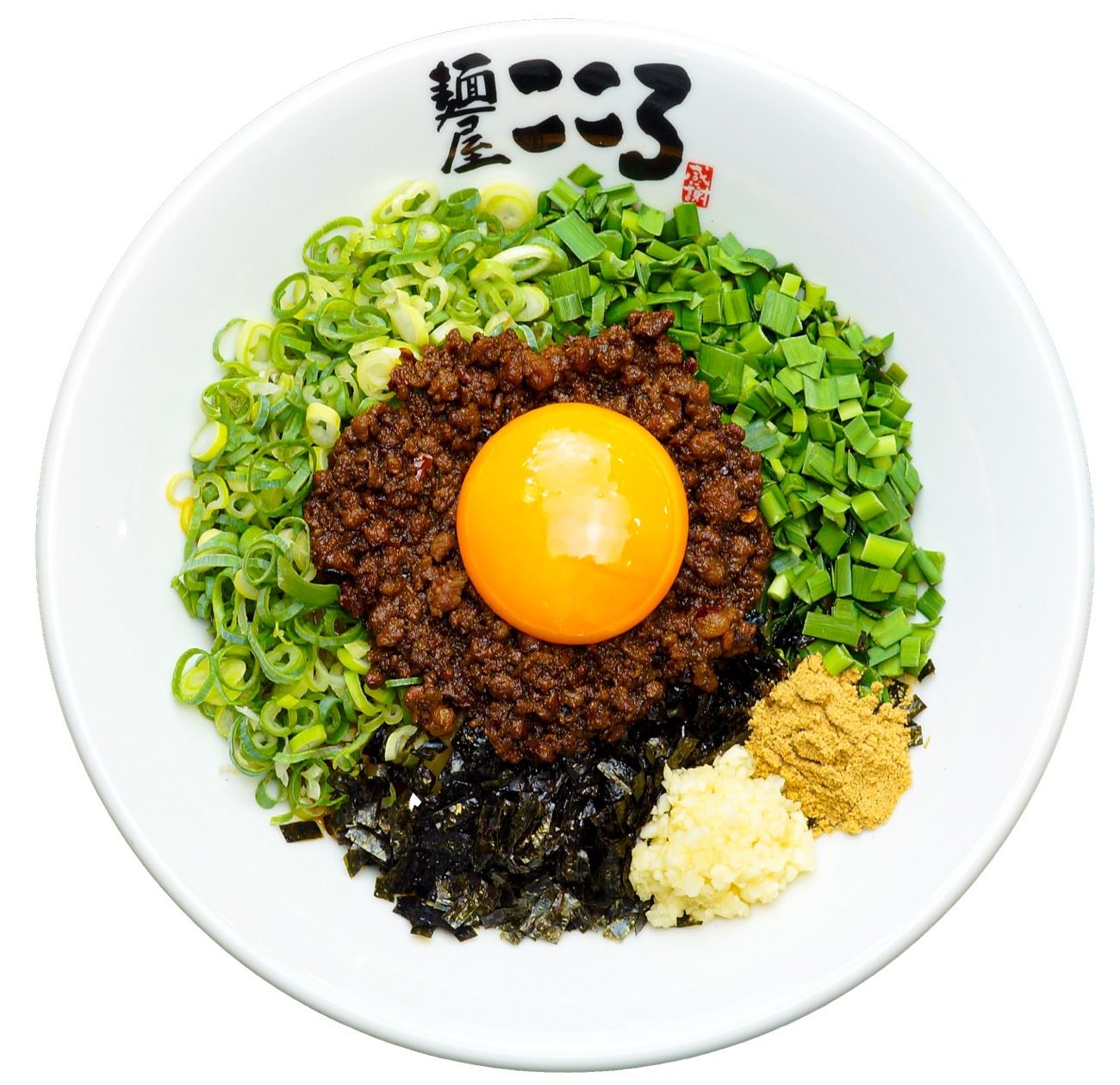
Kokoro Tokyo Mazesoba built one of Asia’s most exportable noodle franchises on a deceptively simple menu: mazesoba, a brothless, sauce-tossed noodle bowl invented as an alternative to ramen. This deep dive unpacks what is actually on the menu — and why its architecture is a structural advantage for franchise operators.
The Kokoro Tokyo Mazesoba menu is organized around four pillars: the classic mazesoba line, the indulgent “Mamire” series, a mild and non-spicy line, and a compact ramen range — finished by Oi-meshi, a free rice ritual served at nearly all shops.
The core lineup centers on Classic Mazesoba, refined continuously since the first Tokyo shop opened in 2014 under founder-chef Takuma Ishikawa. Around it sit signature variations:
After finishing the noodles, guests receive Oi-meshi — a small portion of rice, free of charge at virtually all shops — to mix into the leftover sauce. It turns one dish into two experiences, raises perceived value without raising food cost meaningfully, and gives the brand a memorable signature competitors cannot easily copy.
Because every bowl shares one noodle base and a central-kitchen sauce system, kitchens run without the labor-intensive broth program that defines conventional ramen — shorter ticket times, less equipment, smaller footprints. Compared with traditional ramen franchises, a mazesoba unit removes the single most failure-prone element of Japanese noodle operations while keeping premium pricing power, as detailed in our Kokoro Tokyo Mazesoba franchise overview.
Menu discipline also shows up in operations details: for delivery and to-go in hot season, shops substitute a seasoned boiled egg for the classic raw egg yolk — a small, systematized food-safety adaptation that signals mature franchise playbooks.
In Japan, the brand has crossed into retail with Family Mart instant and frozen mazesoba items and Nissin-produced instant mazesoba and sauce products for supermarkets — consumer-goods distribution that most mid-size noodle brands never achieve. The menu keeps moving too: a new Onion & Char Siu product launched June 1, 2026, and new shops continue opening, including Ritto (Shiga) on June 20, 2026.
Yes. The brand’s official website lists franchise availability across Australia, Canada, Hong Kong, Japan, the Philippines and Singapore, with master franchise whitespace remaining in markets such as Vietnam, Thailand and the Gulf. Japanese F&B continues to be among the most sought-after categories by Asian and MENA investors — a trend visible from Asian brands expanding confidently into Western markets even as regional F&B competition intensifies. A defensible signature dish, a rice ritual that costs little and means much, and CPG-grade brand equity make the Kokoro menu one of the stronger product moats in the category.
This article was prepared by the VF Franchise Consulting editorial team for informational purposes. For the latest franchise opportunities, visit vffranchiseconsulting.com.