The short answer. A Liqitomic franchise lets a business-to-business operator install and service on-site anatomical waste treatment units for hospitals, laboratories, veterinary practices and universities. VF Franchise Consulting, a cross-border franchise advisory firm focused on Asia Pacific and MENA, sees the best launches start with one anchor healthcare client, a regulatory pathway agreed early, and a partner that already sells into clinical procurement.
Liqitomic is an anatomical waste treatment brand headquartered in the UK that replaces incineration with on-site chemical dissolution. The technology was developed by Sanondaf, a UK-based specialist in advanced decontamination systems since 2014, and VF’s Liqitomic franchise opportunity profile describes it as validated through scientific trials at a leading UK university and proven in commercial operation.
The franchise is a territory business. A partner markets the units to institutions that generate human or animal anatomical waste, arranges installation at the client’s site, and supports operation and servicing over time. The brand’s own site, Liqitomic, presents the proposition under the line “Anatomical waste reimagined”.
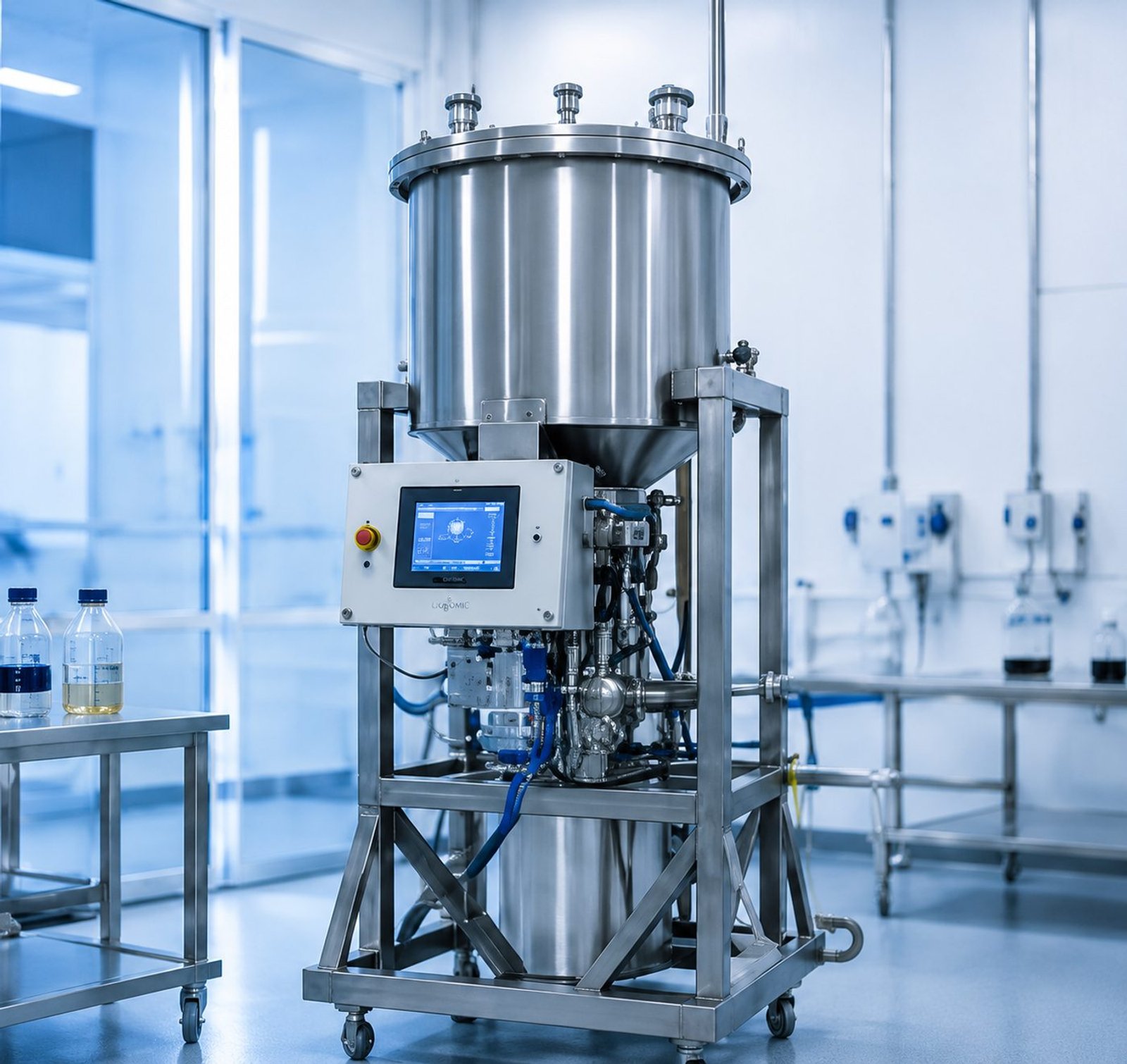
According to VF’s brand profile, the Liqitomic process neutralises anatomical waste, including bone, tissue and skin, through chemical dissolution, with processing typically under one hour. The resulting output is neutralised for standard discharge, and treatment at source removes the need for manual handling, freezing and transport to a central incinerator. The development work ran as an 18-month project with measured performance results.
Healthcare buyers look at on-site treatment because it cuts handling risk, transport and emissions at the same time. The World Health Organization’s fact sheet on health-care waste states that about 85% of the waste generated by health-care activities is general, non-hazardous waste, while the remaining 15% is hazardous. Pathological waste, which covers human tissues, organs, body parts and contaminated animal carcasses, sits inside that hazardous share.
The same WHO fact sheet notes that only modern incinerators operating at 850–1100 °C with special gas-cleaning equipment meet international emission standards for dioxins and furans. It recommends favouring safe and environmentally sound treatment, including chemical treatment, over medical waste incineration where feasible. WHO also reports that, according to WHO/UNICEF data, only 61% of hospitals had basic health-care waste services in 2021.
For a hospital chief operating officer, those points translate into three procurement questions: how much waste leaves the building, how it is stored before collection, and what the facility’s sustainability reporting says about disposal. A Liqitomic partner answers all three with one installed unit.
A Liqitomic franchise launch is best run in five stages, from regulatory mapping to multi-site rollout. The table below sets out the sequence VF Franchise Consulting uses when planning service-franchise entries of this kind, similar to the approach in our proof-store to network rollout guide.
| Stage | Main objective | What the partner prepares |
|---|---|---|
| 1. Regulatory mapping | Confirm the approval route for on-site anatomical waste treatment and discharge | Briefing for environment and health regulators; list of permits and discharge standards |
| 2. Anchor client | Sign one hospital, laboratory or university as the reference site | Clinical waste audit, site survey, internal champion in facilities or infection control |
| 3. Pilot installation | Prove throughput, staff workflow and compliance reporting in live use | Installation plan, operator training, documentation pack for auditors |
| 4. Segment expansion | Extend to veterinary practices, research labs and private hospital groups | Case study from the pilot, sector-specific sales materials |
| 5. Territory rollout | Build a multi-site service network with recurring servicing | Service team, spare-parts plan, account management for group clients |
Stage 1 matters most. Rules on treating and discharging pathological waste differ by country and sometimes by city, and the regulator’s view will shape which clients can be signed first.
The right Liqitomic franchise owner is a B2B operator that already sells into regulated institutions. The sales cycle runs through procurement committees, infection control leads and environmental compliance officers, so relationships and technical credibility count more than brand marketing.
Operators already running Sanondaf’s decontamination services are a natural fit, since both technologies come from the same UK company. VF covered that model in is Sanondaf a good franchise, and our earlier piece on the Liqitomic operator profile goes deeper on capabilities.
The Liqitomic franchise fits markets where hospital capacity, research activity and environmental regulation are all rising. VF’s brand profile lists four application groups: hospitals and medical centres, veterinary clinics and research labs, universities and biomedical facilities, and emergency or field operations using portable units.
Across Asia Pacific, the strongest signals tend to come from cities with large private hospital groups and university research clusters. In MENA, the same test applies: a market with expanding hospital capacity and a regulator open to alternatives to incineration is the starting point. Territory availability is not published on VF’s profile, so each country is confirmed case by case; the mechanics of securing rights are covered in our Liqitomic territory rights guide.
Clinic-based service franchises follow a similar site and approval logic. The DAMO clinic rollout roadmap shows how a regulated service brand sequences its first locations in the same regions.
VF Franchise Consulting’s view is that Liqitomic is a B2B infrastructure franchise, and should be evaluated like one. The questions that decide success are not about footfall or menu mix. They are about how fast a regulator approves on-site treatment, how many anchor institutions the partner can reach in year one, and whether the partner can field a service team that hospital engineers trust.
VF advises applicants to verify three items before signing: the local legal status of chemical treatment and discharge of pathological waste, a named shortlist of first clients with decision-makers identified, and the service model for maintenance and consumables. Our franchise due diligence checklist covers the contractual side, and the franchise consultant vs broker comparison explains how VF’s advisory role differs from a sales intermediary.
VF Franchise Consulting lists the Liqitomic franchise with a minimum investment of US$250,000. Territory terms and the wider commitment depend on the country and the size of territory, and VF shares them with qualified applicants on request.
The practical next step for an interested operator is a short brief to VF covering target country, existing healthcare relationships and technical service capability. That allows VF’s in-market directors to confirm territory status and map the regulatory route before any commitment.
The Liqitomic franchise is a territory licence to deploy Liqitomic on-site anatomical waste treatment units with hospitals, laboratories, veterinary practices and universities. Liqitomic was developed by Sanondaf, a UK decontamination company operating since 2014. Partners build a business-to-business client base and manage installation, operation and service in their territory, with VF Franchise Consulting advising on the market entry.
VF Franchise Consulting publishes a single minimum investment figure for Liqitomic, shown in the investment section of this article and on the brand profile. Fee structure, territory terms and the full commitment depend on the market and the size of territory requested, and are shared with qualified applicants during the enquiry process.
The best-fit Liqitomic partner is a business-to-business operator with existing relationships in healthcare, laboratory or environmental services, such as a medical equipment distributor, a facilities management group or a clinical waste contractor. Technical service capability and experience with regulated clients matter more than consumer retail experience, because the sales cycle runs through procurement and compliance teams.
Liqitomic suits markets with growing hospital capacity, active veterinary and research sectors and regulators that favour cleaner alternatives to incineration. In Asia Pacific and MENA, that includes cities with large private hospital groups and university research clusters. Availability by country changes, so VF Franchise Consulting confirms open territories for each enquiry.
Launch time depends mainly on local environmental and health-waste approvals and on how quickly the partner signs its first anchor client. A typical sequence runs through regulatory review, a pilot installation with one hospital or laboratory, and then a wider rollout across the territory. VF Franchise Consulting helps partners plan each stage before committing.
Email: info@vffranchiseconsulting.com | Hotline: +84 90 306 54 58
Author: Sean T. Ngo, CEO and Co-founder of VF Franchise Consulting.