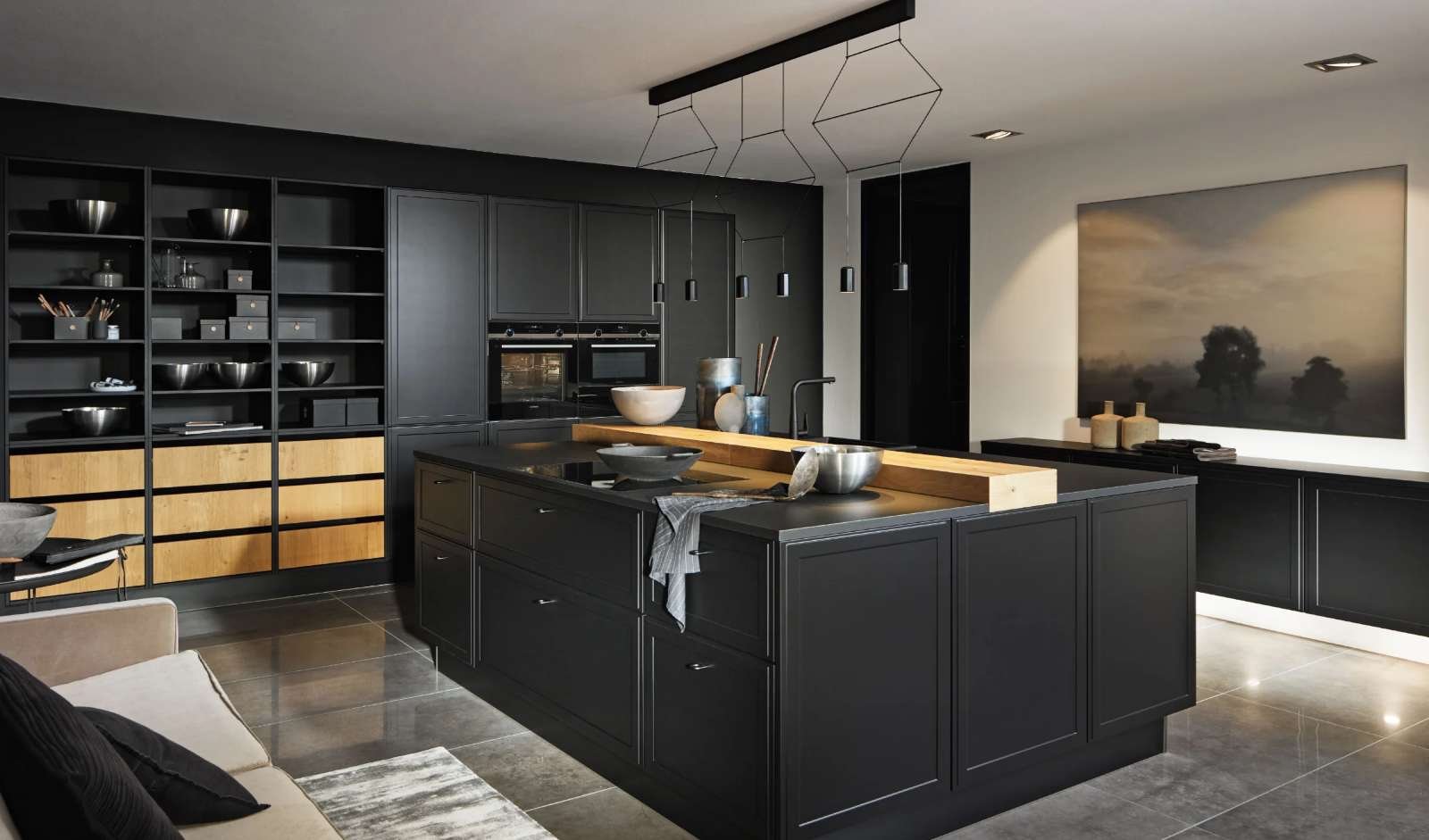
German kitchen manufacturer Nolte is converting part of its long-established UK distribution into a franchise network, targeting up to 25 franchise locations by 2027. After 40 years in the market operating through 120 independent showrooms and 15 company-owned studios, the manufacturer now sees room for as many as 100 UK store locations across all three ownership models.
Nolte is not replacing its dealer base. It is adding a third channel alongside independents and company-owned studios, and the reasoning is about control of shelf space. Independent showrooms typically carry several competing kitchen brands; a franchise showroom is a dedicated selling environment. Managing Director of Nolte Kitchens UK Chris Rushby has framed the model as a way to accelerate brand visibility while guaranteeing that dedicated space.
That distinction — brand-dedicated versus multi-brand distribution — is the same tension consumer brands face across furniture, appliances, flooring and building products in every market, including Asia Pacific and MENA.
The rollout is underway rather than theoretical. Franchise showrooms are open in:
Three more are planned for Hawkhurst, Edinburgh and Wakefield before year-end. Nolte has also appointed Kam Bharadwa as national franchise manager to run the programme.
The franchise channel is explicitly intended to bring new investors into a mature category where many independent showroom owners are approaching retirement. That is a generational transfer question as much as a growth question — and it is the same one facing long-established distribution networks across developed and developing markets alike.
“It’s less risky for franchisees as well. So it’s a win-win.”
Rushby has been direct that existing partners are not being cannibalised: Nolte will not open a franchise or company-owned store next to an independent dealer, with the location strategy built around gaps on the map rather than overlap. He has also pointed to a demonstrable franchise model with a supporting P&L — the thing prospective franchisees actually underwrite.
That territorial discipline is the hard part of any hybrid network. Manufacturers that add franchising without an explicit encroachment rule tend to lose the dealer base they were trying to complement.
Three things travel well from this deal. First, franchising is a legitimate channel strategy for manufacturers, not only a restaurant or services play — a point often missed by investors screening only restaurant and food service formats. Second, conversion of an existing dealer network is materially different from a cold-start rollout: the brand already has demand, and the franchisee is buying into proven local sell-through.
Third, and most useful for anyone evaluating a brand’s readiness to export, the presence of a documented unit-level P&L and a written encroachment policy is a reliable signal of franchisor maturity. Brands that cannot produce either are usually not ready for a cross-border partner, whatever the category. That test applies equally to the non-food service concepts now drawing portfolio investors in the region.
For Gulf and Southeast Asian groups that already distribute European home and interiors brands, a manufacturer building franchise infrastructure in its home market is worth tracking. It usually means the systems, training and territory frameworks needed for an international master franchise or area development agreement are being built for the first time — and that is precisely when cross-border franchise advisory gets involved, before the first international territory is committed.
Source: Indian Retailer / FranchiseTv — Franchise News: Nolte Kitchens Unveils UK Franchise Expansion Plan