The short answer. A master franchise rollout is the staged process of building a franchise brand in a territory, usually from one proof store to a multi-unit network. Recent Asia Pacific and MENA cases follow a pattern: sign the master partner, open one carefully chosen proof store, then scale against targets. VF Franchise Consulting breaks the sequence into five stages.
A master franchise rollout is the staged development of a franchise brand in a territory by a master franchisee, typically moving from one proof store to a multi-unit network. VF Franchise Consulting, a cross-border franchise advisory firm focused on Asia Pacific and MENA, sees the same pattern across very different brands: a master partner is signed, a first site is chosen with care, and growth targets follow once the first store trades.
How partners are selected is covered in VF’s guide to how franchisors choose a master franchisee. This article looks at what happens after the signature.
Brands open a proof store first to test the format, site type, staffing and supply chain in a new market before committing to a network. The evidence from this month points the same way.
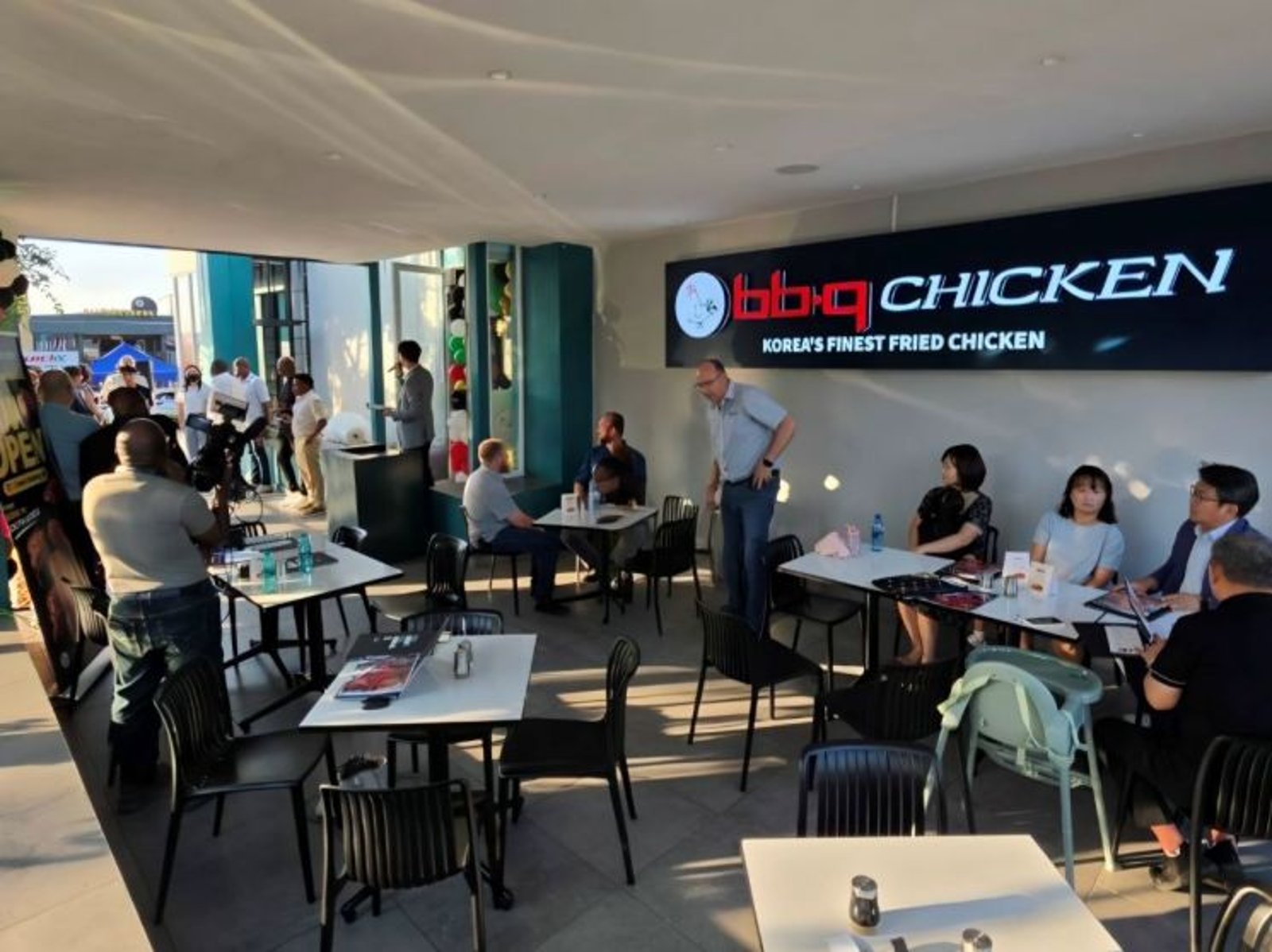
The Korea Times reported that Genesis BBQ signed a master franchise agreement for South Africa with Good Tree South Africa, a distributor of Korean food products, on 5 November 2025. The Asia Business Daily reported that the first bb.q CHICKEN store opened on 13 November 2026 at Cresta Crossing Mall in Randburg, Johannesburg, with about 149 square meters and 54 seats. VF covered the opening in its bb.q CHICKEN South Africa report.
Mary Brown’s Chicken followed a similar path in India. Franchise TV reported on 3 November 2026, as covered in VF’s Mary Brown’s India report, that the chain entered India in 2025 with a flagship outlet in Chandigarh and then widened its footprint across Delhi-NCR and Punjab.
VF breaks a typical rollout into five stages. The sequence is VF’s analytical framework, built from the cases in this article.
| Stage | What happens | What an investor or operator should verify |
|---|---|---|
| 1. Master agreement | Development rights granted to a local partner | Partner’s existing operations and management bench |
| 2. Proof store | First site opens | Location logic, opening date and trading results |
| 3. Format adjustment | Menu, layout or service refined locally | What was changed and why |
| 4. Second wave | More sites in the same cluster | Signed leases and fit-out progress |
| 5. Network scale | Sub-franchising or area development begins | Support systems, training and reporting for new operators |
A proof-store location is chosen for consumer demand and visibility rather than low cost. In the bb.q case, The Asia Business Daily cited Statistics South Africa data showing that Gauteng Province, where Johannesburg sits, was the country’s largest consumer market in 2023, with about 36% of national household consumption spending. It described Randburg as an area with a relatively high share of high-income households, in a mall that hosts local dining brands and global chains.
Catchment analysis of this kind is the subject of VF’s territory planning and site selection guide.
The rights granted to a partner shape how a rollout scales. Harlem Shake, according to VF’s report on its India agreement, signed a master franchise agreement with Franchise India to develop 75 units, and plans to grow through regional master franchise and area-development models. The same structural choice is explained for a fitness brand in VF’s note on master versus area development.
A regional master carries responsibility for recruiting and supporting sub-franchisees in a region. An area developer opens units on a schedule and does not usually sub-franchise. The two roles need different teams, so partners should match the model to their management capacity.
Network targets show a brand’s ambition and the capacity its partner says it will build. Nirula’s, the Indian fast-food chain, told FranchiseTV on 12 November 2026 that it aims to grow from more than 150 outlets to 300 within two years, as VF reported in its Nirula’s expansion report. The Sydney Morning Herald reported that Jollibee signed exclusive franchise agreements on 15 November 2026 for 35 restaurants in Victoria and New South Wales over five years, as covered in VF’s Jollibee Australia report.
These are targets, not results. Compare them with signed sites, openings to date and the partner’s management depth. VF’s franchise due diligence checklist sets out what a master partner should verify before signing.
VF Franchise Consulting’s view is that rollouts stall between the proof store and the second wave, when the first store’s results meet the partner’s capacity to open more sites. Before committing, a prospective master partner should ask the franchisor three questions: what the proof store is expected to demonstrate, what happens if the format needs adjusting, and what support the brand provides when sub-franchising starts. Independent advice also helps; VF explains the difference in its comparison of a franchise consultant and a franchise broker. Industry bodies such as the Franchising and Licensing Association (Singapore) offer membership, training and certification resources for franchisors and franchisees. This is VF’s analysis, not a statement from any brand named here.
A master franchise rollout is the staged process by which a master franchisee develops a brand across a territory. It usually starts with a proof store, then scales through company-owned units, sub-franchisees or area developers. The master partner holds development rights and carries responsibility for opening units, training teams and protecting brand standards.
A proof store tests the menu or service, site type, staffing and supply chain in the new market before the network grows. It gives the franchisor and master partner real trading data to adjust the format. In the cases VF reviewed, brands chose a single, carefully selected location before announcing larger unit targets.
It varies by brand and market. In one case reported this month, a Korean fried chicken brand signed a master franchise agreement on 5 November 2025 and opened its first South African store on 13 November 2026, according to The Korea Times and The Asia Business Daily. Site selection, fit-out and supply set-up drive the timing.
A master franchise gives a partner the right to develop a territory and usually to sub-franchise to others. An area development agreement gives the right to open a set number of units in a defined area on a schedule, normally without sub-franchising. Some brands combine both, as with regional master and area-development models in India.
No. Targets such as 300 outlets in two years or 35 restaurants in five years are stated intentions, not results. Investors and operators should compare them with signed sites, openings to date and the partner’s management capacity. VF recommends tracking delivery against each stage of the rollout rather than the headline number.
Email: info@vffranchiseconsulting.com | Hotline: +84 90 306 54 58
Author: Sean T. Ngo, CEO and Co-founder of VF Franchise Consulting.