The short answer. A PizzaExpress franchise works best in premium, high-footfall dining locations where a full-service, family-friendly pizzeria with an open kitchen can trade across lunch, dinner and weekends. VF Franchise Consulting sees site quality and operator depth, rather than menu adaptation, as the two factors that decide whether a PizzaExpress market entry succeeds.
PizzaExpress is a casual dining pizzeria brand headquartered in the United Kingdom that franchises its restaurant system to partners outside its company-owned markets. Founder Peter Boizot opened the first restaurant in London’s Soho in 1965, and according to VF’s PizzaExpress franchise opportunity profile, the brand now has nearly 360 pizzerias in the UK and Ireland.
Outside the UK, PizzaExpress runs company-owned operations in Hong Kong and the UAE and franchise operations across Asia, the Middle East and Europe, with more than 100 international sites. The brand’s stated target is 1,000 restaurants globally by 2030, including the UK. Its menu signatures include Dough Balls, the American Hot and the Sloppy Giuseppe, alongside vegan, gluten-free and lighter pasta and salad dishes.
The PizzaExpress proposition goes beyond the dining room. In the UK, VF’s profile describes an omnichannel brand with dine-in, delivery through its own platform and a retail range in 4,000 supermarkets, plus more than 3.5 million members in the PizzaExpress Club loyalty scheme. VF has covered that model in detail in its analysis of the PizzaExpress omnichannel model.
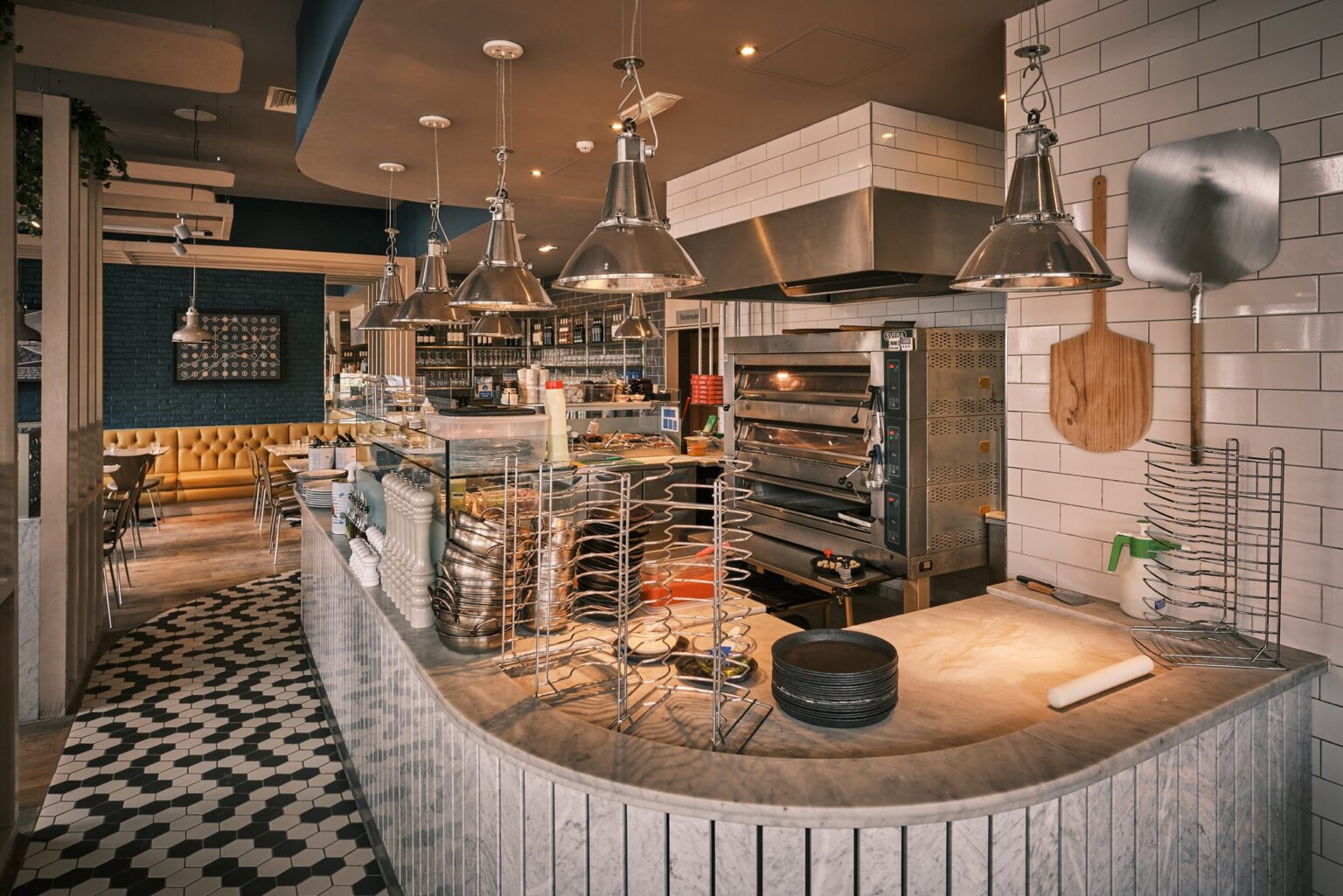
For an international franchise partner, the core PizzaExpress format is the full-service pizzeria: table service, an open kitchen with a visible pizza oven, and a dining room designed for families, couples and groups of friends. That is the format the brand exports, and it is the format found across its international restaurants.
Within that format, partners can vary size, layout and daypart emphasis to suit the location. A mall unit leans on weekend family traffic, a high-street unit on evening social dining, and a business-district unit on weekday lunch. In the UK the brand also runs seven PizzaExpress Live music venues, per its official international page, which shows how far the concept can stretch, though the dine-in pizzeria remains the anchor for new markets.
For the wider category picture, VF’s guide to pizza franchise formats in Asia Pacific and MENA compares delivery-led and dine-in pizza brands.

The best PizzaExpress franchise sites combine premium footfall, evening and weekend trade, and space for a visible open kitchen. Because the brand sells a sit-down experience rather than speed, dwell time and ambience count for more than drive-by traffic.
VF’s assessment of the main site types is summarised below. It is an operator-fit view, not a list of available territories.
| Site type | Fit with the PizzaExpress format | What to check before signing |
|---|---|---|
| Premium shopping mall | Strong: family weekend traffic, dining-floor clustering, cinema and leisure anchors | Kitchen ventilation for the oven, frontage onto the main dining concourse, late trading hours |
| Lifestyle or mixed-use district | Strong: evening social dining, outdoor seating, residential catchment | Parking, weekday lunch demand, competing casual dining density |
| Established high street | Good: brand visibility and walk-in trade | Evening footfall after offices close, delivery radius, licensing rules |
| Business district | Moderate: strong weekday lunch, softer weekends | Weekend trade, corporate catering potential |
| Hotel or resort precinct | Moderate to good: tourist and family dining | Seasonality, landlord terms, access for non-resident guests |
Data tools make this step faster. VF’s guide to franchise site selection and territory planning explains how location intelligence is used to rank catchments before a lease is signed, and the casual dining site models article covers footprint trade-offs across the category.
The right PizzaExpress franchise partner is an established multi-unit hospitality group that can open several full-service restaurants and run them to UK brand standards.
VF looks for the following in a credible applicant:
VF’s profile of PizzaExpress international partners looks at the type of groups the brand has worked with, and the franchise due diligence checklist covers what both sides verify before signing.
VF Franchise Consulting’s brand profile lists a minimum investment level of US$1,500,000 for a PizzaExpress partner.
Territory scope, the development schedule and the remaining commercial terms are not published. They are discussed with qualified applicants once the market and the partner’s plan are clear, so investors should treat a direct enquiry as the starting point.
Opening a PizzaExpress franchise follows a staged path from enquiry to a multi-unit network. The sequence VF typically sees for full-service international brands is:
Whether that plan sits under a master franchise, an area development agreement or a joint venture changes who funds what. VF compares the three in its guide to master franchise vs area development vs joint venture.
In VF’s view, the PizzaExpress format travels well because it does not depend on a local taste shift. Pizza and pasta are already familiar across Asia Pacific and MENA, so the challenge is execution: securing the right site, holding service standards and keeping the dining room lively across dayparts.
The brand’s international footprint, which the official PizzaExpress international restaurants page lists as covering Ireland, Cyprus, Gibraltar, Hong Kong, India, Indonesia, Kuwait, Macau, Singapore, Spain, Turkey and the UAE as of November 2026, shows the concept working in very different retail environments. For a new partner, the practical lesson is to put the first restaurant in a site that showcases the brand at its best, then expand from proven trading data rather than from the territory map alone.
Yes. PizzaExpress runs company-owned restaurants in the UK, Ireland, Hong Kong and the UAE and works with franchise partners elsewhere. Its official international page says the brand has more than 20 years of franchising experience, and VF Franchise Consulting’s brand profile notes franchise operations across Asia, the Middle East and Europe, with more than 100 international sites.
A PizzaExpress franchise needs a full-service restaurant site with room for an open pizza kitchen and oven, a comfortable dining room and good visibility. In VF Franchise Consulting’s view, premium malls, mixed-use lifestyle districts and established high streets with strong evening and weekend footfall are the strongest fits for the brand’s family and social dining positioning.
PizzaExpress does not publish a full cost breakdown. VF Franchise Consulting’s PizzaExpress profile lists an entry investment level for prospective partners, and the complete commercial terms, including territory scope and fees, are shared only with qualified applicants through a direct enquiry, because they depend on the market and the development plan.
As of November 2026, the official PizzaExpress international page lists restaurants in Ireland, Cyprus, Gibraltar, Hong Kong, India, Indonesia, Kuwait, Macau, Singapore, Spain, Turkey and the UAE. Availability of rights in any other market is confirmed case by case, so investors should request current territory status before planning.
The ideal partner is an established casual dining or hospitality operator with access to premium real estate, the balance sheet to fund a multi-unit development plan, and a management team able to run a full-service brand to UK standards. Experience with international franchisors and with mall landlords in the target market shortens the path to the first opening.
Email: info@vffranchiseconsulting.com | Hotline: +84 90 306 54 58
Author: Sean T. Ngo, CEO and Co-founder of VF Franchise Consulting.